Kerbtest

South African road signs, explained

The road signs section of the learner's test is about recognising a sign and knowing what it requires of you. Here are the signs grouped the way the South African Road Traffic Signs Manual groups them. Free to use, no sign-up.

Drawings are our own, made to look like the real signs. The legal meaning of every sign is set out in the National Road Traffic Regulations, 2000 and the South African Road Traffic Signs Manual.

Control · Command · Prohibition · Reservation · Warning · Guidance and information · Temporary · Road markings · Traffic signals

Control

Control signs tell you to stop or yield. They have their own shapes so you can recognise them from behind or in poor light.
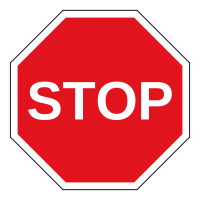
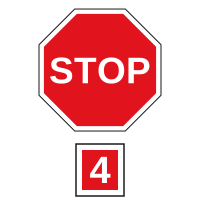
Stop
StopStop completely at the stop line, or before the intersection if there is no line, and go only when it is safe to do so.
Four-way stop
Four-way stopStop completely; at a four-way stop the vehicle that stopped first may go first, and you proceed only when it is safe.
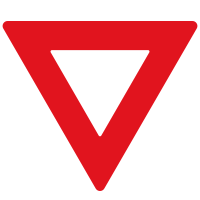
Yield
YieldSlow down or stop if necessary and give way to all traffic and pedestrians on the road you are entering, then go only when it is safe.
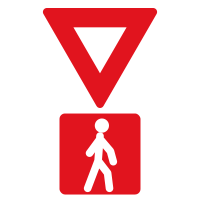
Give way to pedestrians
Give way to pedestriansGive way to pedestrians crossing the road here, stopping if necessary before you continue.
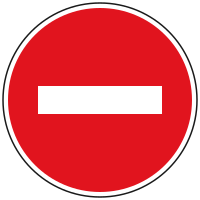
No entry
No entryYou may not drive into the road beyond this sign, usually because it is the wrong end of a one-way road.
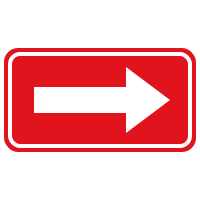
One-way roadway
One-way roadwayTraffic on this road may only travel in the direction the arrow points.
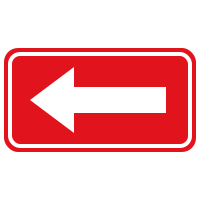
One-way roadway (to the left)
One-way roadway (to the left)Traffic on this road may only travel to the left, in the direction the arrow points.
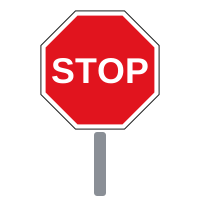
Scholar patrol stop sign
Scholar patrol stop signWhen a scholar patrol member holds out this sign you must stop before it, or behind the yield line, and wait until the sign is withdrawn.

Command

Command signs tell you what you must do, such as which way to go.
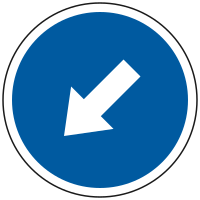
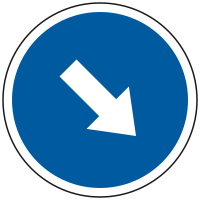
Keep left
Keep leftYou must pass on the left side of the sign or obstruction.
Keep right
Keep rightYou must pass on the right side of the sign or obstruction.
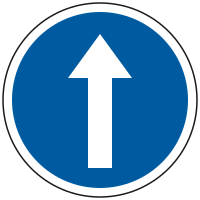
Proceed straight only
Proceed straight onlyYou must go straight ahead and may not turn left or right.
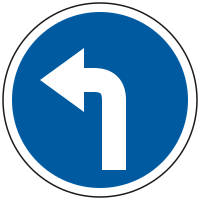
Turn left ahead
Turn left aheadYou must turn left at the junction ahead.
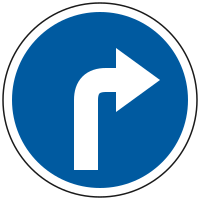
Turn right ahead
Turn right aheadYou must turn right at the junction ahead.
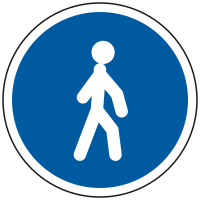
Pedestrians only
Pedestrians onlyThe road or path beyond the sign is for pedestrians only, so vehicles may not use it.

Prohibition

Prohibition signs tell you what you may not do. Most are a white disc with a red ring.
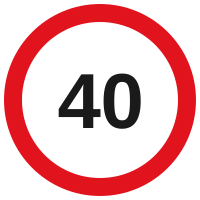
Speed limit 40 km/h
Speed limit 40 km/hYou may not drive faster than 40 km/h on the road beyond this sign.
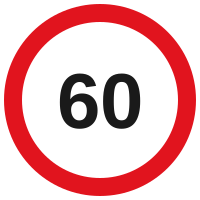
Speed limit 60 km/h
Speed limit 60 km/hYou may not drive faster than 60 km/h on the road beyond this sign.
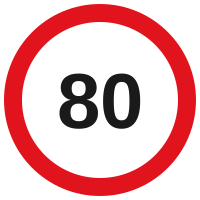
Speed limit 80 km/h
Speed limit 80 km/hYou may not drive faster than 80 km/h on the road beyond this sign.
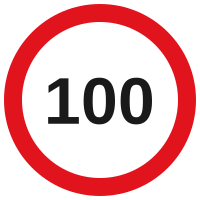
Speed limit 100 km/h
Speed limit 100 km/hYou may not drive faster than 100 km/h on the road beyond this sign.
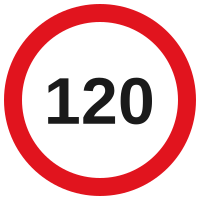
Speed limit 120 km/h
Speed limit 120 km/hYou may not drive faster than 120 km/h on the road beyond this sign.
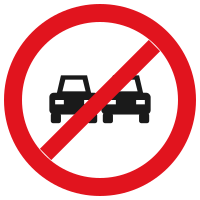
No overtaking
No overtakingYou may not overtake other motor vehicles on the road beyond this sign.
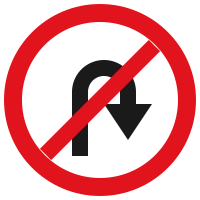
No U-turn
No U-turnYou may not make a U-turn to go back in the opposite direction at or beyond this sign.
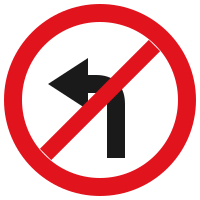
No left turn
No left turnYou may not turn left at the junction where this sign is displayed.
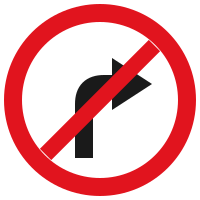
No right turn
No right turnYou may not turn right at the junction where this sign is displayed.
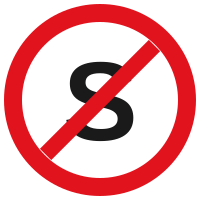
No stopping
No stoppingYou may not stop on this side of the road beyond the sign, except when traffic, a traffic signal or an emergency forces you to.
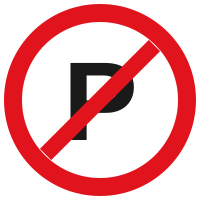
No parking
No parkingYou may not park on this side of the road beyond the sign, although you may stop briefly to pick up or set down passengers or goods.
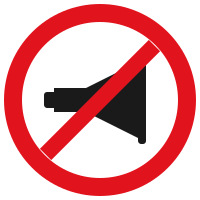
No hooting
No hootingYou may not sound your hooter beyond this sign, which is often used near hospitals, except to avoid an accident.
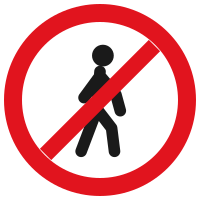
No pedestrians
No pedestriansPedestrians may not walk on or cross the road beyond this sign.

Reservation

Reservation signs keep a lane, road or parking area for certain road users only.
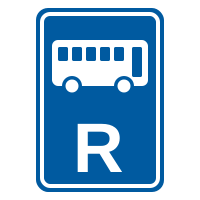
Reserved for buses
Reserved for busesThe road or area beyond the sign is reserved for buses, so other vehicles may not use it.
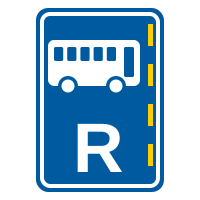
Bus lane
Bus laneThe lane is reserved for buses, so other vehicles may not drive in it during the times shown.
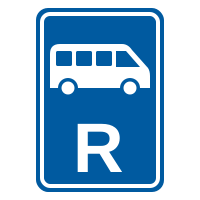
Reserved for minibus taxis
Reserved for minibus taxisThe road, lane or area is reserved for minibus taxis, so other vehicles may not use it.
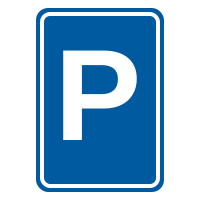
Parking
ParkingYou may park here, subject to any time limits or conditions shown on a plate with the sign.

Warning

Warning signs are triangles with a red border. They warn you of a danger or change in the road ahead, so you can slow down in time.
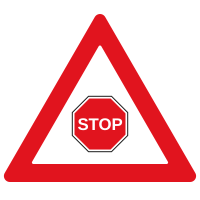
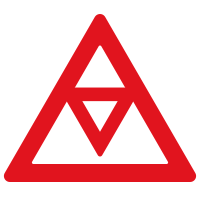
Stop sign ahead
Stop sign aheadThere is a stop sign ahead, so slow down and be ready to stop.
Yield sign ahead
Yield sign aheadThere is a yield sign ahead, so slow down and be ready to give way.
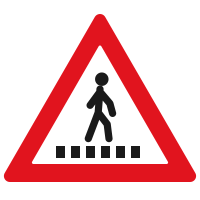
Pedestrian crossing ahead
Pedestrian crossing aheadThere is a pedestrian crossing ahead, so slow down and be ready to stop for pedestrians.
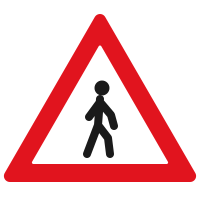
Pedestrians ahead
Pedestrians aheadPedestrians may be walking on or crossing the road ahead, so slow down and watch out for them.
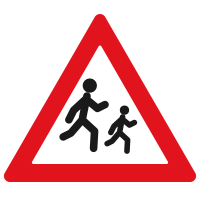
Children ahead
Children aheadChildren may be crossing or playing near the road ahead, often near a school, so slow down and watch out for them.
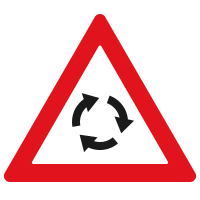
Traffic circle ahead
Traffic circle aheadThere is a traffic circle ahead, so slow down and be ready to give way to traffic already in the circle.
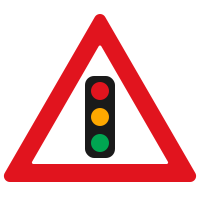
Traffic signals (robot) ahead
Traffic signals (robot) aheadThere are traffic signals ahead, so slow down and be ready to stop.
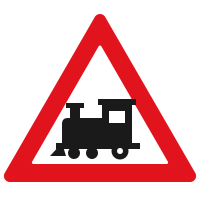
Railway crossing ahead
Railway crossing aheadThere is a railway level crossing ahead, so slow down, look and listen for trains, and be ready to stop.
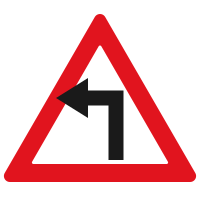
Sharp curve to the left
Sharp curve to the leftThe road ahead bends sharply to the left, so slow down before you reach the curve.
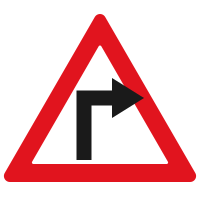
Sharp curve to the right
Sharp curve to the rightThe road ahead bends sharply to the right, so slow down before you reach the curve.
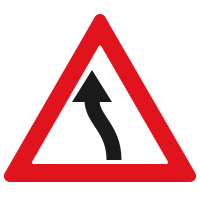
Gentle curve to the left
Gentle curve to the leftThe road ahead curves gently to the left, so adjust your speed and keep left.
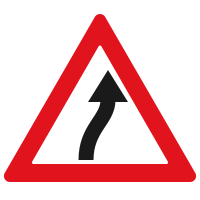
Gentle curve to the right
Gentle curve to the rightThe road ahead curves gently to the right, so adjust your speed and keep left.
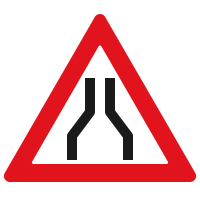
Road narrows
Road narrowsThe road ahead becomes narrower from both sides, so slow down and take care with oncoming traffic.
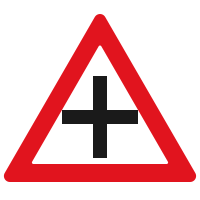
Crossroad ahead
Crossroad aheadThere is a crossroad ahead where other traffic may enter or cross, so slow down and be ready to give way.
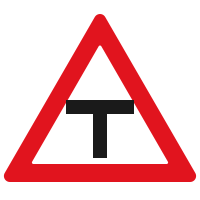
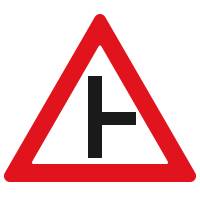
T-junction ahead
T-junction aheadThe road you are on ends at a T-junction ahead, so slow down and be ready to give way and turn left or right.
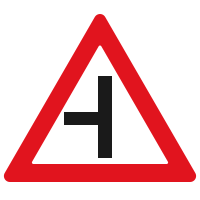
Side road from the left
Side road from the leftA side road joins from the left ahead, so watch for vehicles entering or leaving it.
Side road from the right
Side road from the rightA side road joins from the right ahead, so watch for vehicles entering or leaving it.
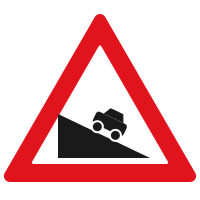
Steep descent
Steep descentThere is a steep downhill ahead, so use a lower gear and keep your speed under control.
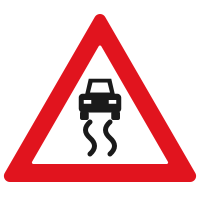
Slippery road
Slippery roadThe road ahead may be slippery, especially when wet, so slow down and avoid sudden braking or steering.
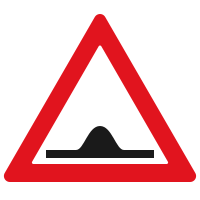
Speed hump ahead
Speed hump aheadThere is a speed hump ahead, so slow down before you reach it.
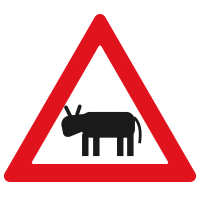
Cattle ahead
Cattle aheadCattle may be on or crossing the road ahead, so slow down and be ready to stop.
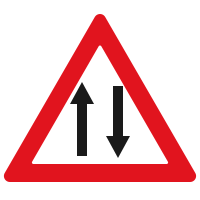
Two-way traffic ahead
Two-way traffic aheadTraffic ahead travels in both directions on the same road, so keep left and expect oncoming vehicles.
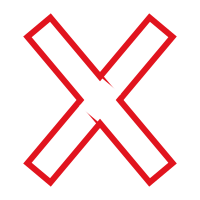
Railway level crossing
Railway level crossingThis cross marks a railway level crossing, so look and listen for trains and stop if one is approaching.
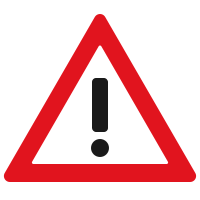
General warning
General warningDanger of some kind ahead, so slow down and look out for anything on or next to the road that could make you change speed or direction.
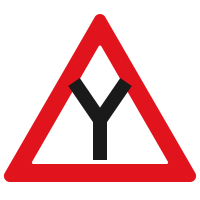
Y-junction ahead
Y-junction aheadThe road ahead forks into two roads, so decide in good time which road to take.
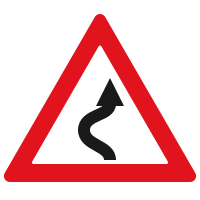
Winding road ahead, first curve to the left
Winding road ahead, first curve to the leftA series of curves lies ahead, the first one to the left, so slow down enough to take them safely; there may be more curves than you can see.
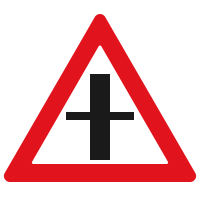
Priority crossroad ahead
Priority crossroad aheadYou are approaching a crossroad where your road (the thicker line) has right of way, but still watch for cross traffic that does not yield.
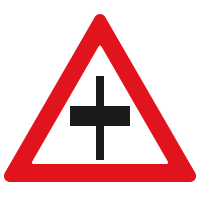
Secondary crossroad ahead
Secondary crossroad aheadYou are approaching a crossroad where the cross road (the thicker line) has priority, so you must yield to cross traffic.

Guidance and information

Guidance and information signs help you find your way and tell you about services and road types.
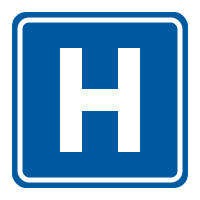
Hospital
HospitalShows that there is a hospital nearby or in the direction indicated.
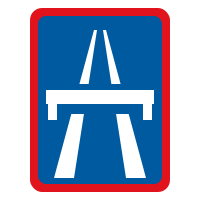
Freeway begins
Freeway beginsFreeway rules apply from here, so pedestrians, cyclists, animal-drawn vehicles and low-powered motorcycles may not use the road and you may not stop except in an emergency.
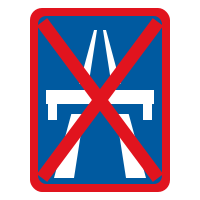
End of freeway
End of freewayThe freeway ends here and its special rules no longer apply, so expect pedestrians, cyclists and slower vehicles.

Temporary

Temporary signs are yellow and are used at roadworks and events. Where they disagree with permanent signs, the temporary sign applies.
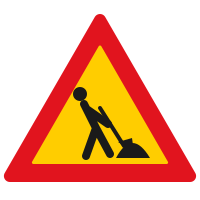
Roadworks ahead
Roadworks aheadThere are roadworks ahead, so slow down, watch for workers and machines, and obey the temporary signs.
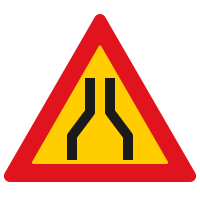
Road narrows (temporary)
Road narrows (temporary)Temporary sign: the road ahead narrows from both sides, for example at road works, so slow down and watch for oncoming traffic.
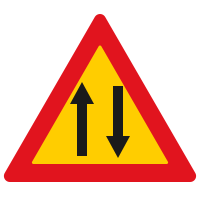
Two-way traffic ahead (temporary)
Two-way traffic ahead (temporary)Temporary sign: traffic in both directions will use the roadway ahead, for example where road works close one side, so keep left and expect oncoming vehicles.
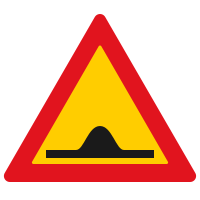
Speed hump ahead (temporary)
Speed hump ahead (temporary)Temporary sign: there is a speed hump ahead, so slow down before you reach it.
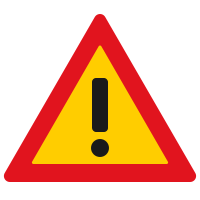
General warning (temporary)
General warning (temporary)Temporary sign: there is danger of some kind ahead, such as at road works or a collision scene, so slow down and look out.
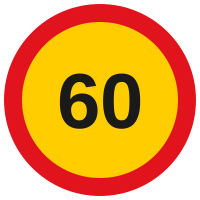
Speed limit 60 km/h (temporary)
Speed limit 60 km/h (temporary)Temporary speed limit: you may not drive faster than 60 km/h, usually at road works; it must be obeyed like a permanent speed limit.
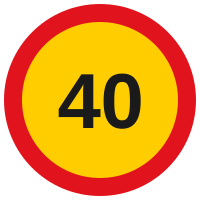
Speed limit 40 km/h (temporary)
Speed limit 40 km/h (temporary)Temporary speed limit: you may not drive faster than 40 km/h, usually at road works; it must be obeyed like a permanent speed limit.

Road markings

Road markings are signs painted on the road surface and carry the same legal weight as signs on poles.
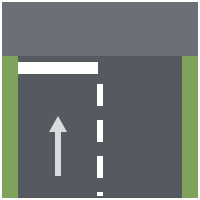
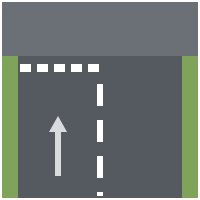
Stop line
Stop lineWhere you must stop for a stop sign, a red robot or a traffic officer, stop with the front of your vehicle behind this line.
Yield line
Yield lineWhere you must give way, slow down and stop behind this line if necessary, and go only when it is safe.
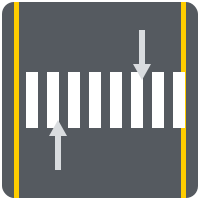
Block pedestrian crossing (zebra crossing)
Block pedestrian crossing (zebra crossing)Pedestrians on or about to step onto the crossing have right of way, so slow down and stop for them.
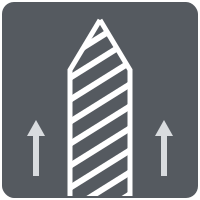
Painted island
Painted islandYou may not drive, stop or park on a painted island, so keep out of the area marked with stripes.
Lane direction arrows
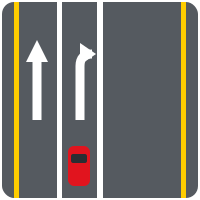
Lane direction arrowsThe arrows show the direction you must take from that lane, so in a lane marked with a right-turn arrow you must turn right.
No-overtaking line
No-overtaking lineYou may not cross or straddle this solid centre line, so you may not overtake across it.
Broken centre line
Broken centre lineYou may cross this broken centre line to overtake when it is safe and the road ahead is clear.
Broken line beside a solid line
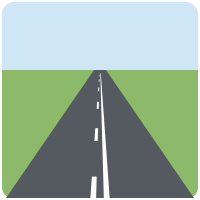
Broken line beside a solid lineDrivers on the side of the broken line may cross to overtake when it is safe, but drivers on the side of the solid line may not cross it.
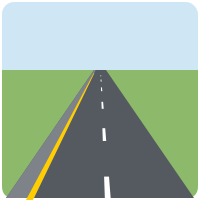
Yellow edge line
Yellow edge lineThe yellow line marks the left edge of the roadway, and the shoulder beyond it is not a normal driving lane.
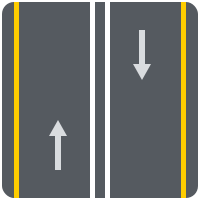
No-crossing lines
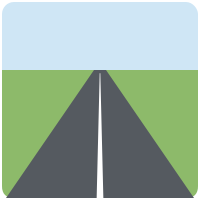
No-crossing linesTwo solid white lines in the centre of a two-way road. You may not cross them or drive on the right of them, except to pass a stationary vehicle or obstruction when it is safe.
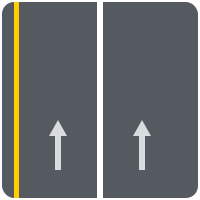
Channelizing line
Channelizing lineA solid white line between lanes that carry traffic in the same direction. You may not cross it, so choose your lane before the line starts.
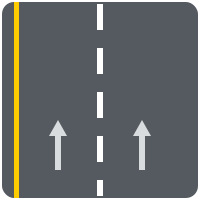
Lane line
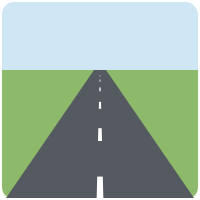
Lane lineA broken white line between lanes that carry traffic in the same direction. Keep to the centre of your lane and change lanes only when it is safe.
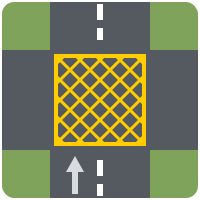
Box junction
Box junctionDo not stop inside the marked box. Enter the intersection only when you can drive right through it.
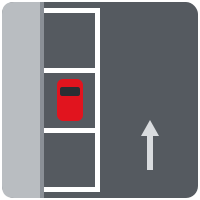
Parking bays
Parking baysThe lines mark where you may park. Park with your whole vehicle inside the lines of one bay.
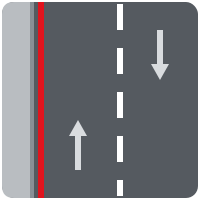
No stopping line
No stopping lineA solid red line along the edge of the road. Except in an emergency, you may not stop next to it.

Traffic signals

Traffic signals, called robots in South Africa, and what each light means.
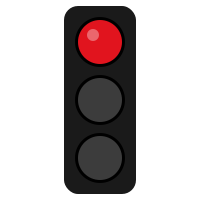
Red robot
Red robotStop behind the stop line and wait there until the robot shows green.
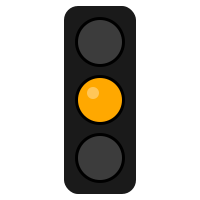
Amber robot
Amber robotStop behind the stop line, unless you are so close when it changes that you cannot stop safely, in which case go through with care.
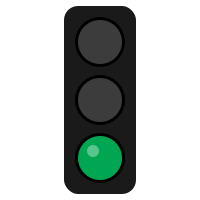
Green robot
Green robotYou may go if the way is clear, but you must still give way to pedestrians and vehicles already in the intersection.
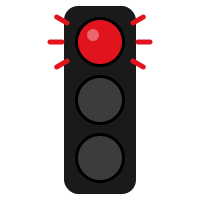
Flashing red robot
Flashing red robotStop completely and go only when it is safe, as you would at a stop sign.
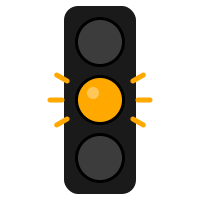
Flashing amber robot
Flashing amber robotSlow down and proceed with caution, giving way where necessary, because the light warns of a hazard.
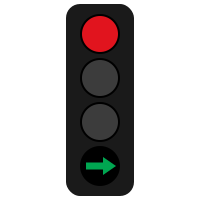
Green arrow (filter)
Green arrow (filter)You may turn in the direction of the green arrow, even while the main light is red, after giving way to pedestrians and vehicles already in the intersection.
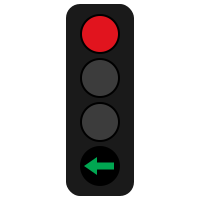
Red robot with green left arrow
Red robot with green left arrowYou may turn left in the direction of the green arrow, after giving way to pedestrians and vehicles already in the intersection, but you may not go straight or turn right.
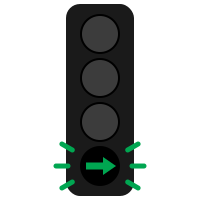
Flashing green arrow to the right
Flashing green arrow to the rightYou may turn right in the direction of the arrow, because oncoming traffic is held, but still give way to pedestrians and vehicles already in the intersection.
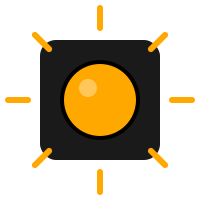
Flashing amber light
Flashing amber lightSlow down and proceed with caution, because the light warns you of a hazard or a point where you may have to give way.
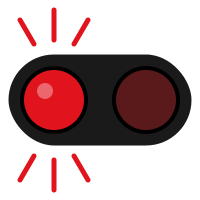
Flashing red lights (level crossing)
Flashing red lights (level crossing)Stop and stay stopped while the red lights flash alternately, because a train is approaching or the road ahead is closed.
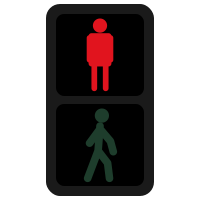
Pedestrian signal: red figure
Pedestrian signal: red figurePedestrians may not start to cross the road while the red standing figure is shown.
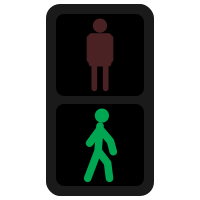
Pedestrian signal: green figure
Pedestrian signal: green figurePedestrians may cross, and drivers turning across the crossing must give way to them.
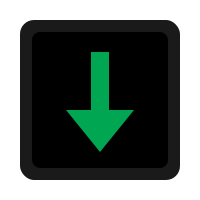
Overhead lane signal: green arrow
Overhead lane signal: green arrowSteady green downward arrow above a lane: you may drive in the lane below the arrow.
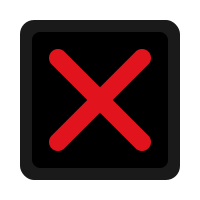
Overhead lane signal: red cross
Overhead lane signal: red crossSteady red cross above a lane: you may not drive in the lane below it, which may be open to traffic coming the other way.

Test yourself

Knowing a sign when you see it written down is not the same as picking its meaning out of three similar answers on a timer. Try 10 free questions, or read the signs people get wrong.